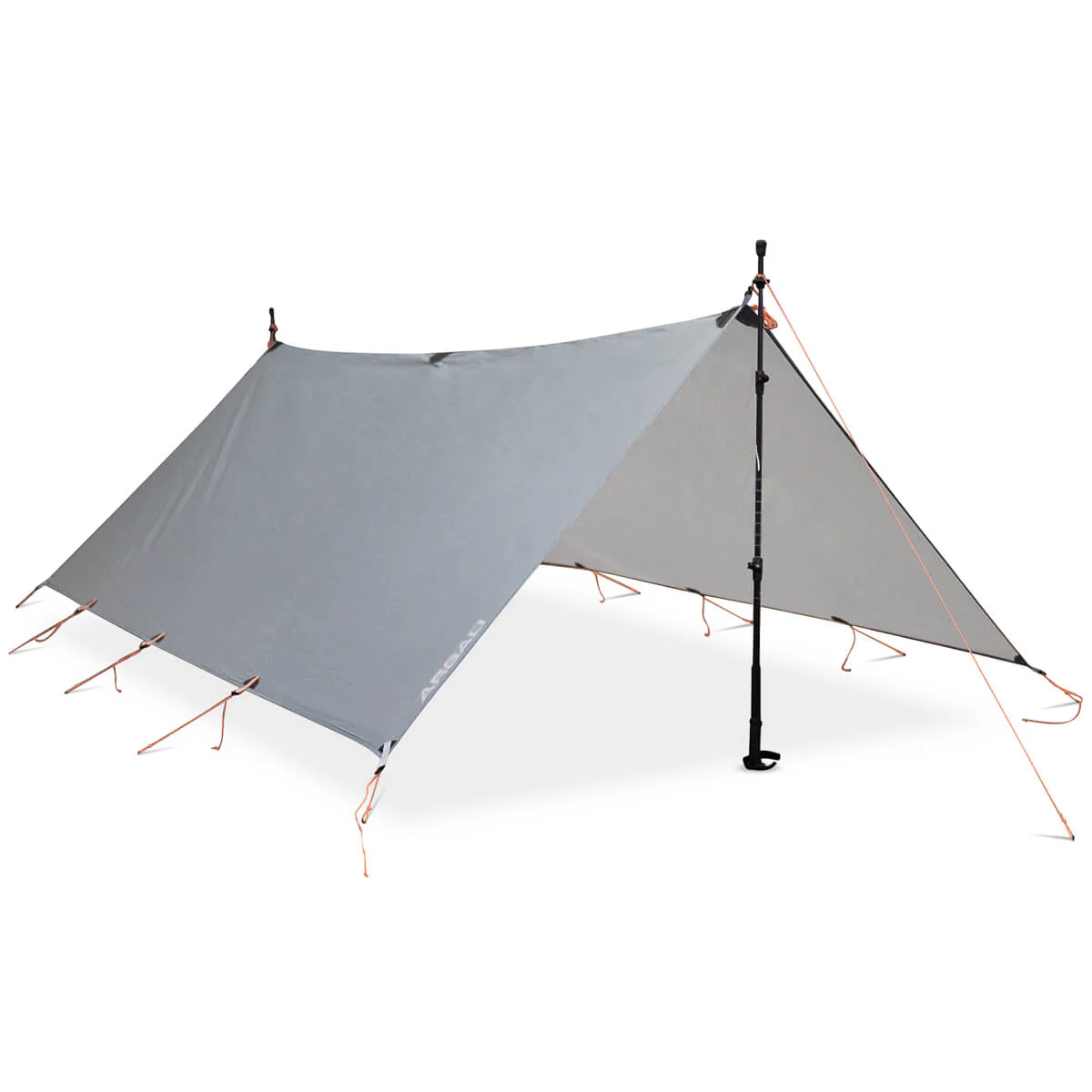
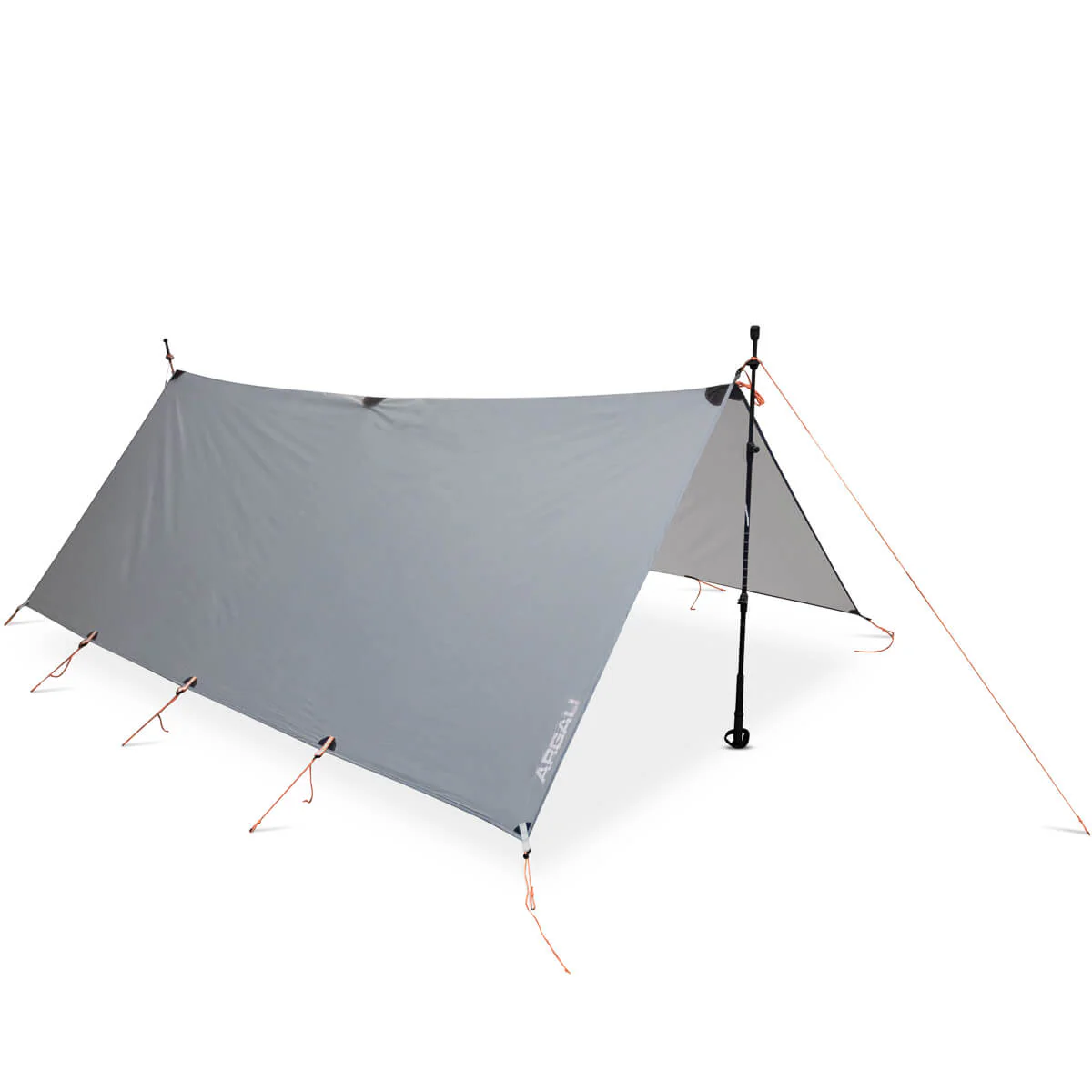
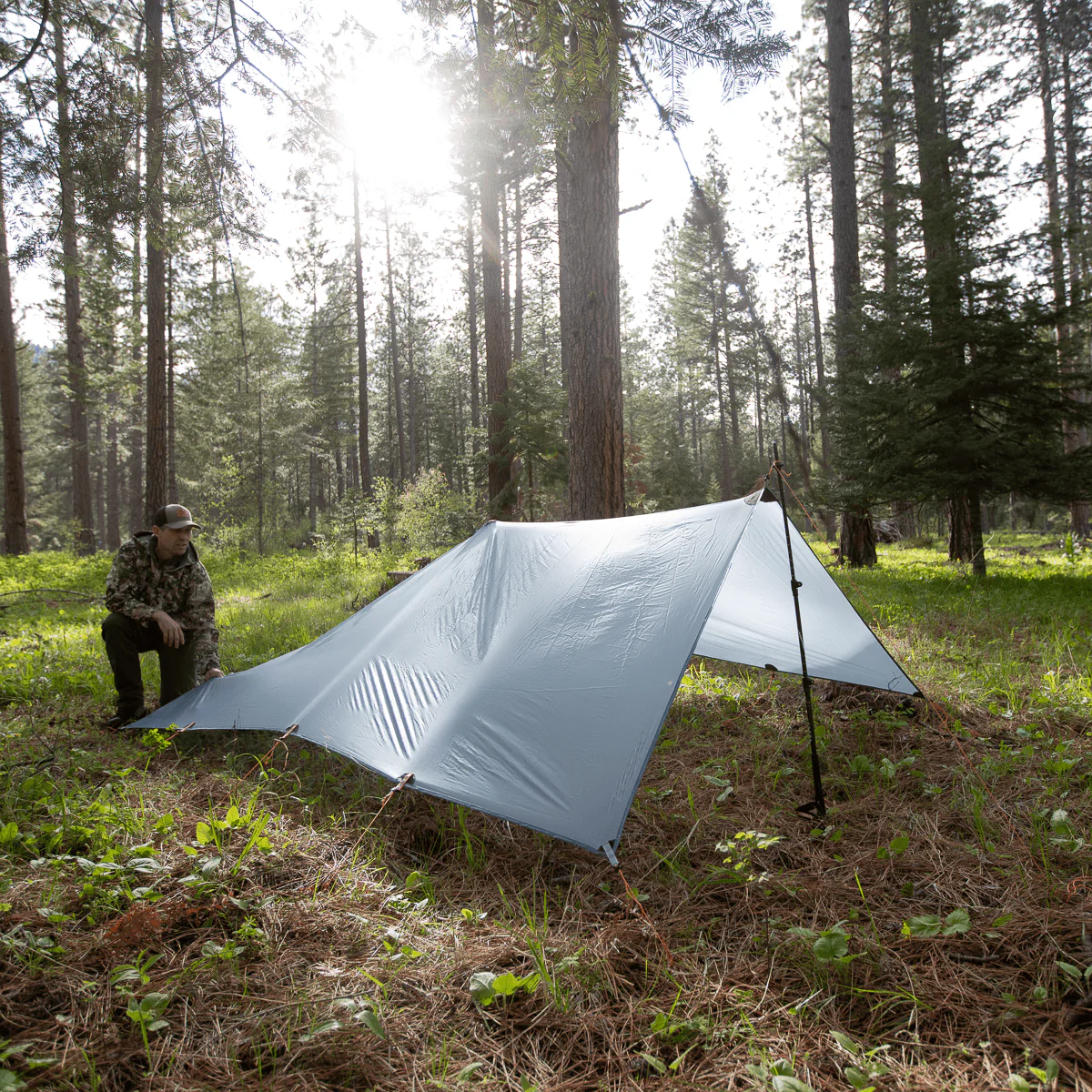
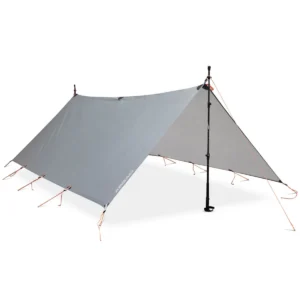
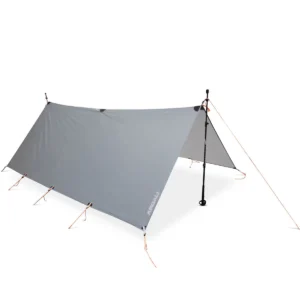
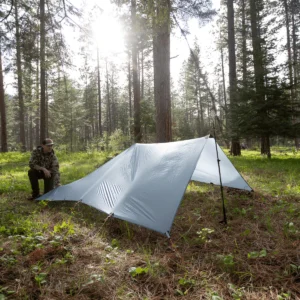
Talus Tarp is a lightweight, flat-cut backcountry shelter designed for versatile protection from rain, wind and sun. Weighing approximately 17.2 ounces with its stuff sack, paracord and line-loc adjusters, it provides a spacious 10 × 8.5-foot coverage area without taking up excessive room in your backpack.
Why Choose the Talus Tarp?
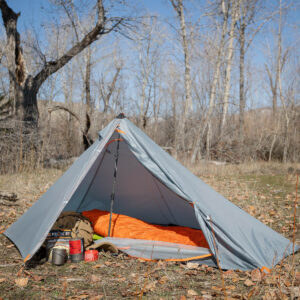
The Talus Tarp offers more setup flexibility than a shelter designed for only one fixed pitch. Its flat-cut rectangular shape can be arranged as an A-frame, modified A-frame, lean-to, elevated rain cover, sunshade or gear-protection area.
This versatility makes it useful as a primary early-season shelter, an emergency layer in a day pack or an additional covered area at a larger campsite.
The tarp uses 20D Nano-Ripstop SilPoly fabric with a sil/sil 2500 mm coating. Polyester absorbs very little water, helping the material maintain its tension and usable coverage during wet weather instead of becoming noticeably loose or heavy.
7 Powerful Talus Tarp Benefits
1. Lightweight Backcountry Protection
The shelter, stuff sack, paracord and line-loc adjusters weigh approximately 17.2 ounces. With the six included stakes, the complete weight is approximately 19.9 ounces.
This low weight makes the tarp suitable for backpacking, mountain hunting, scouting, emergency preparation and other trips where equipment must be carried over long distances.
2. Large 10 × 8.5-Foot Coverage Area
The Talus Tarp measures approximately 10 feet long and 8.5 feet wide. The broad rectangular surface provides room for a sleeping system, backpack and other equipment when pitched as a primary shelter.
An A-frame configuration can accommodate one or two people depending on pole height, ground conditions, sleeping-pad placement and the amount of gear stored beneath the tarp.
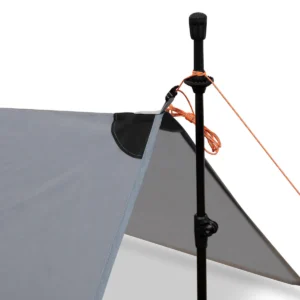
3. Twelve Adjustable Guy-Out Points
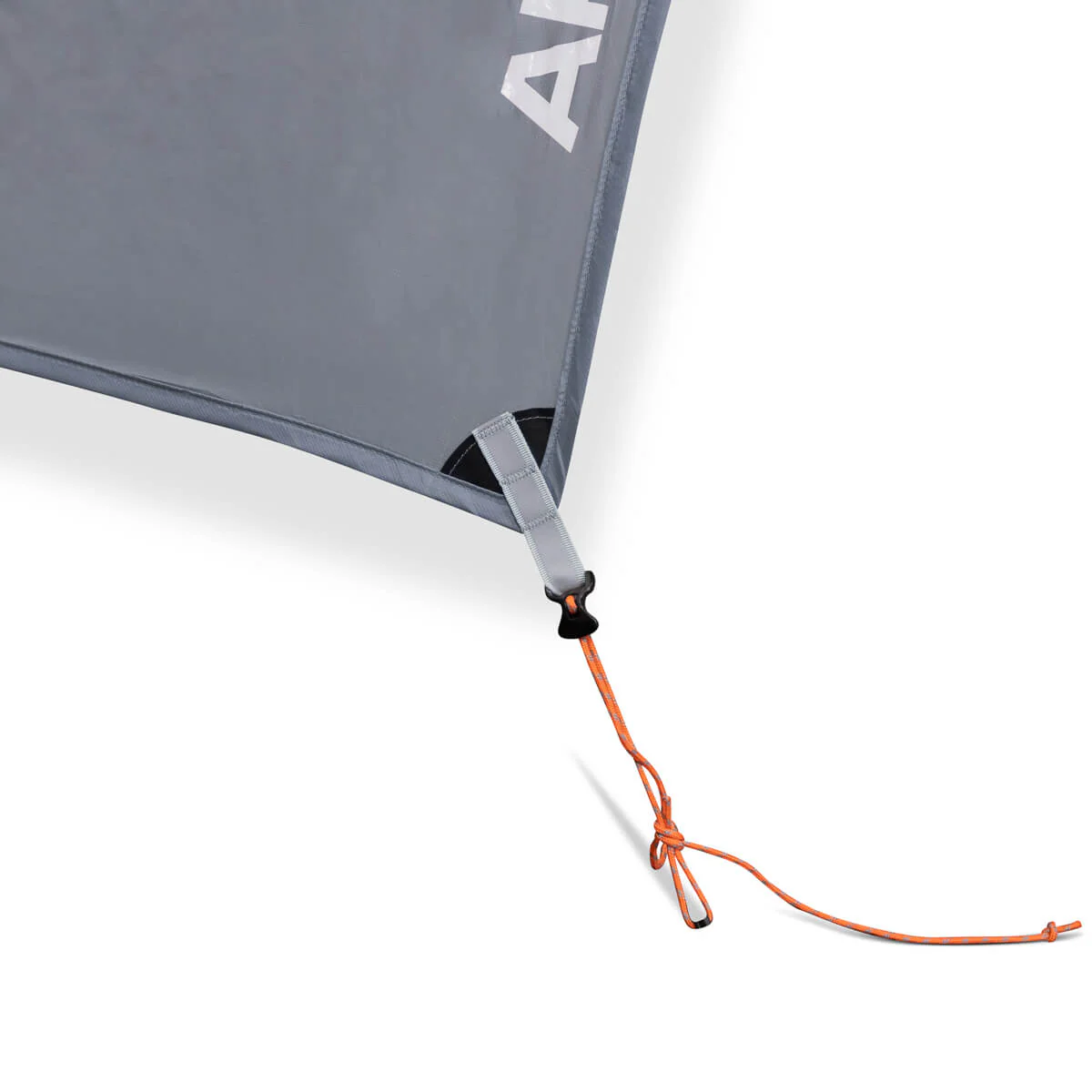
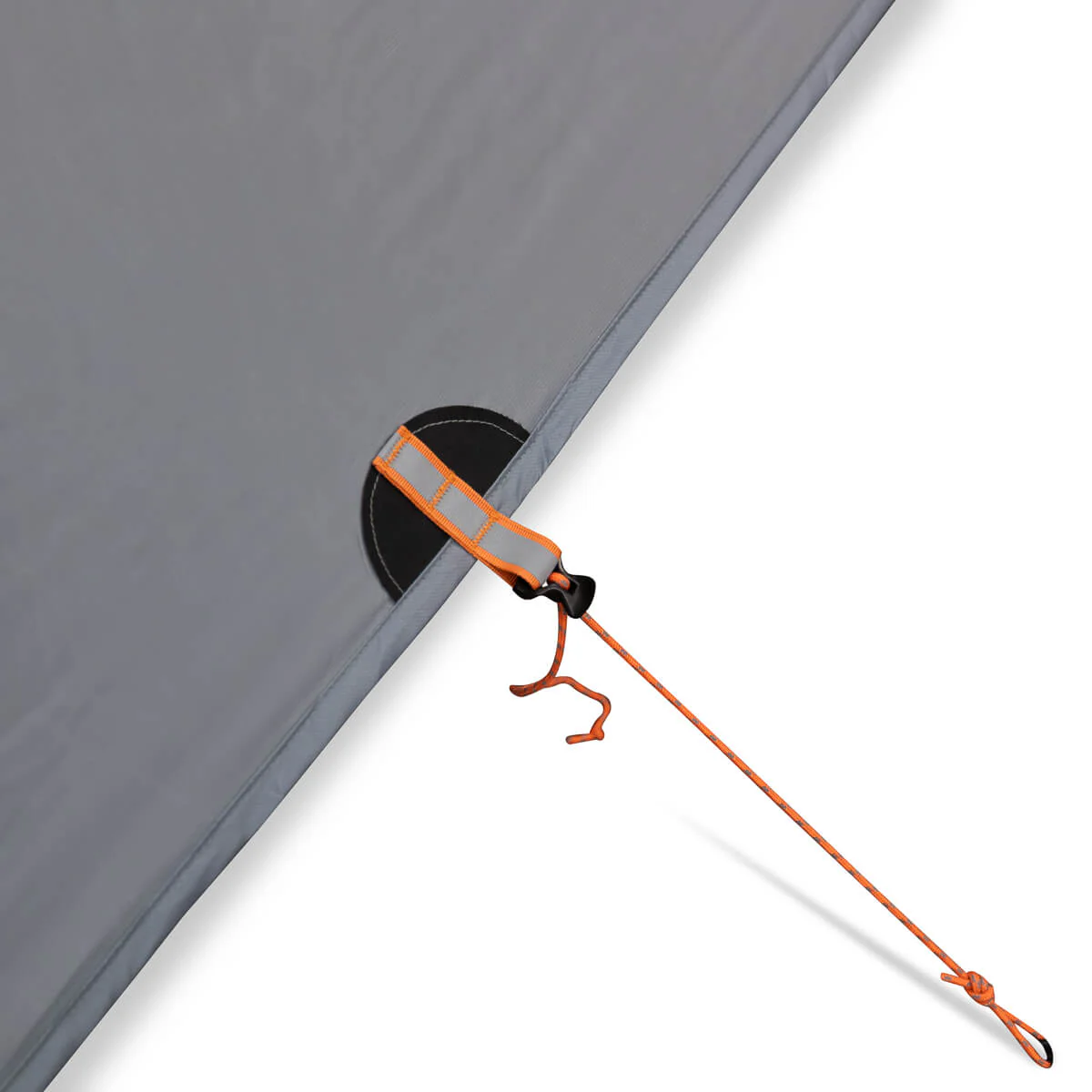
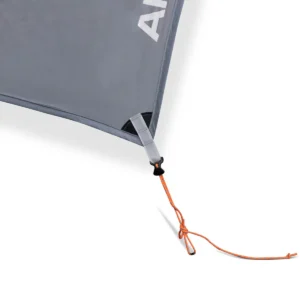
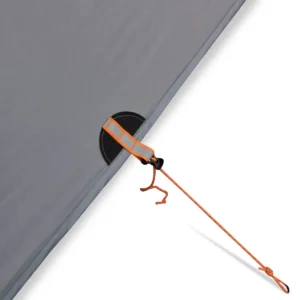
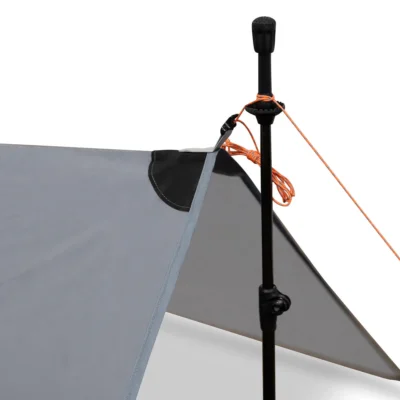
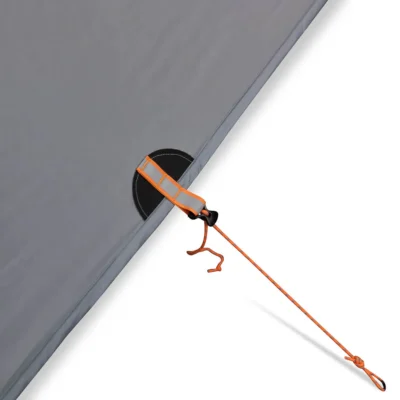
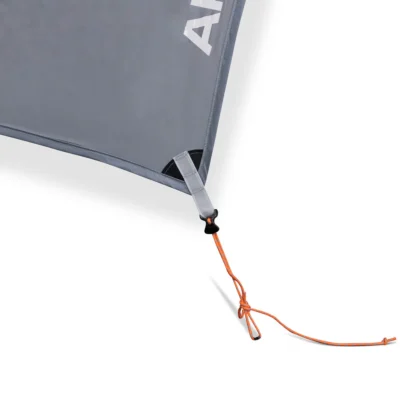
Twelve guy-out points give users multiple ways to control shelter height, wall angle, drainage and wind protection. Each point has an integrated line-loc adjuster, allowing the attached cord to be tightened or loosened without repeatedly retying knots.
The paracord can also be moved between attachment points. This is useful when changing from a low storm pitch to an elevated shade or group-camp configuration.
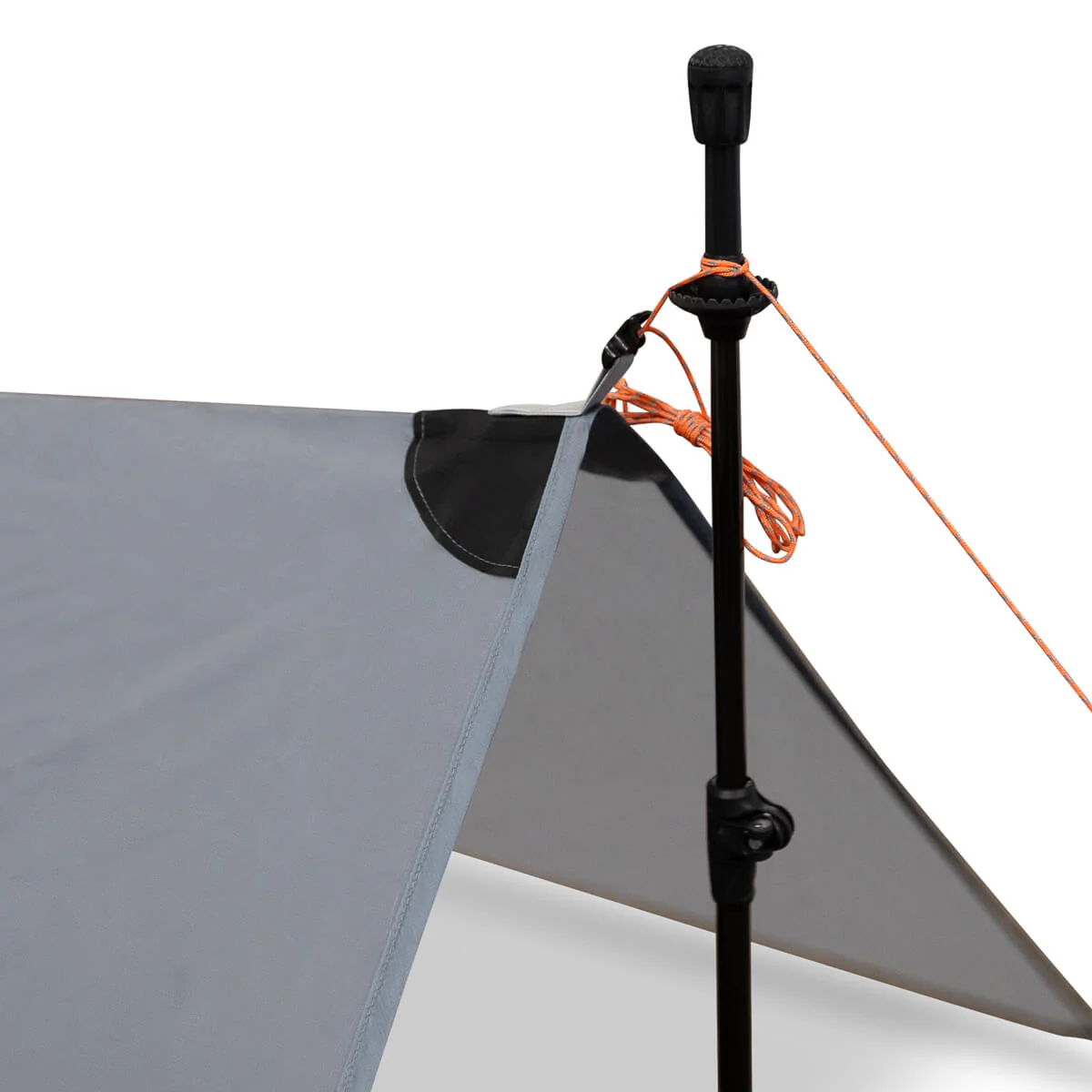
4. Reinforced X-Pac Center
The center of the tarp is reinforced with X-Pac fabric and includes a supported pitching area. A trekking pole can be placed at this point to create more interior height or form a modified shelter configuration.
The reinforced center expands the number of usable pitches and helps distribute tension at an area that may experience concentrated pressure from the pole.
5. No-Sag SilPoly Fabric
The lightweight SilPoly material has very little stretch when wet. This helps the Talus Tarp retain its shape during rain and reduces the need to repeatedly leave shelter to retension loose panels.
The sil/sil coating means silicone is applied to both sides of the fabric. The coating supports water resistance while preserving the lightweight material’s flexibility and useful tear strength.
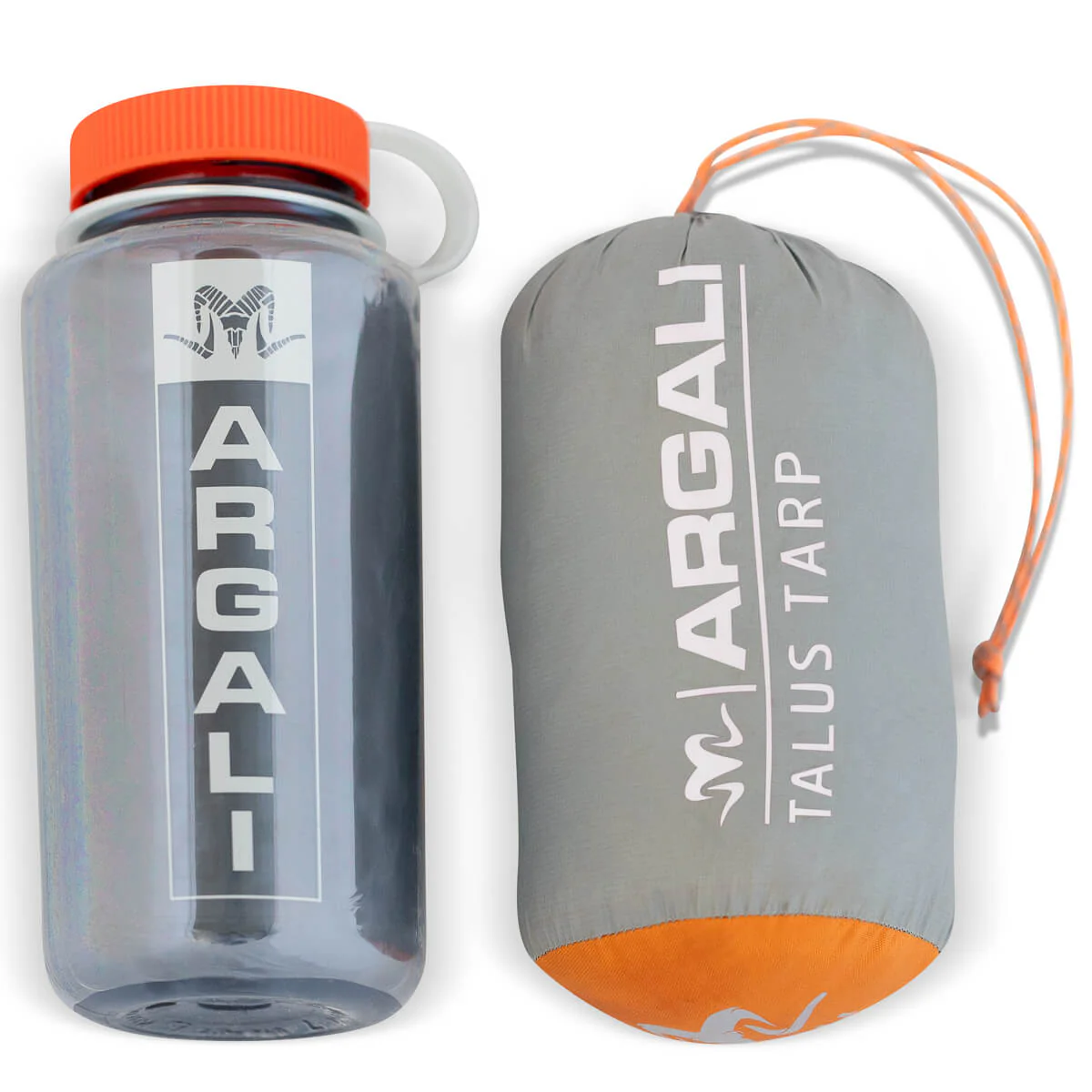
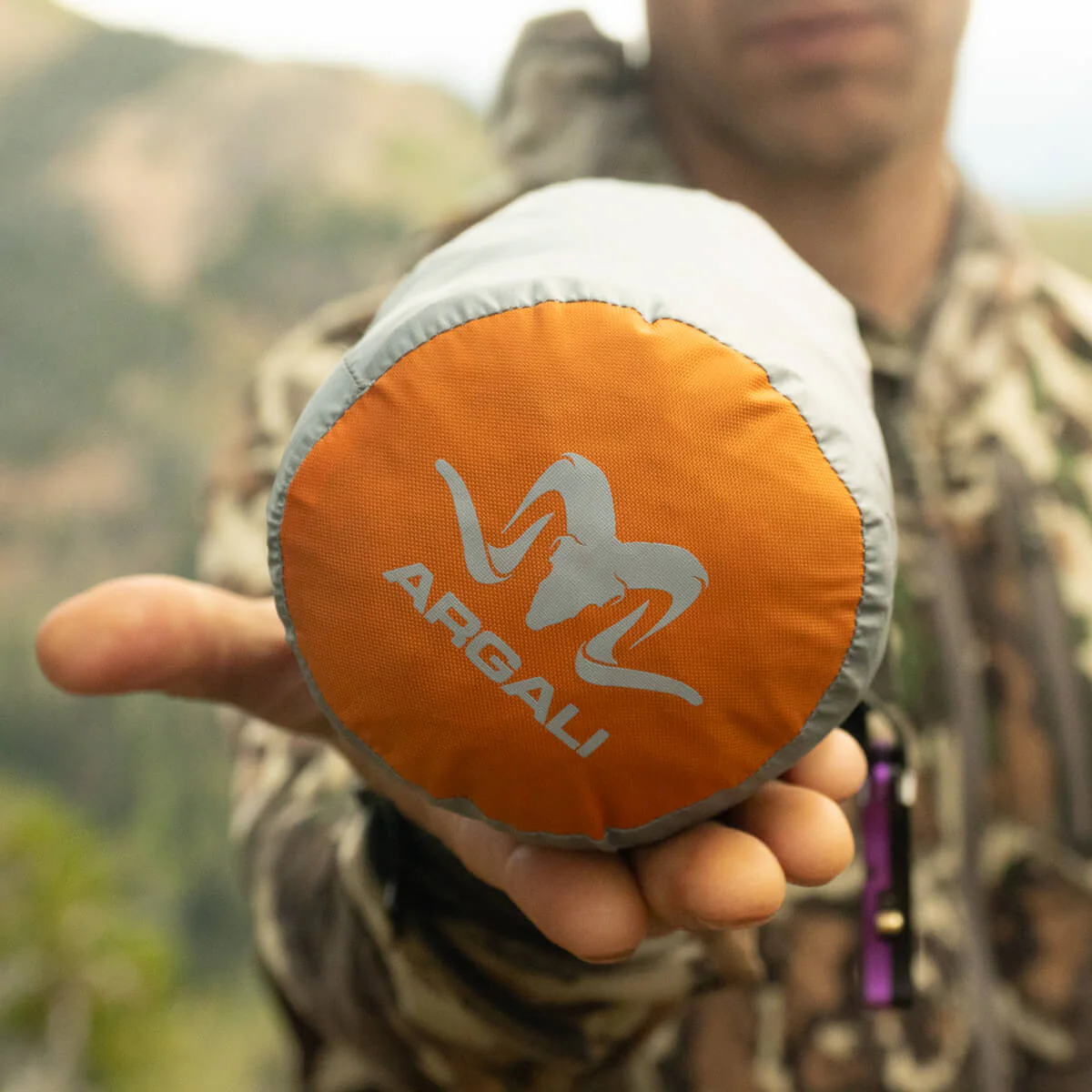
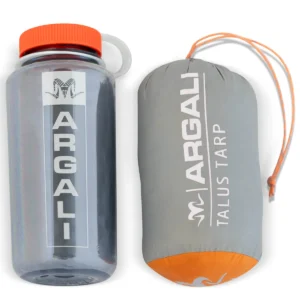
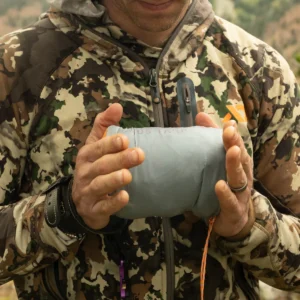
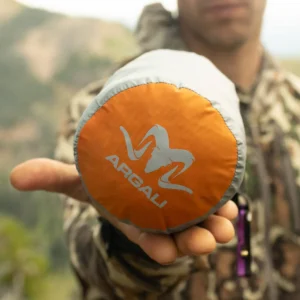
6. Compact 6 × 3-Inch Packed Size
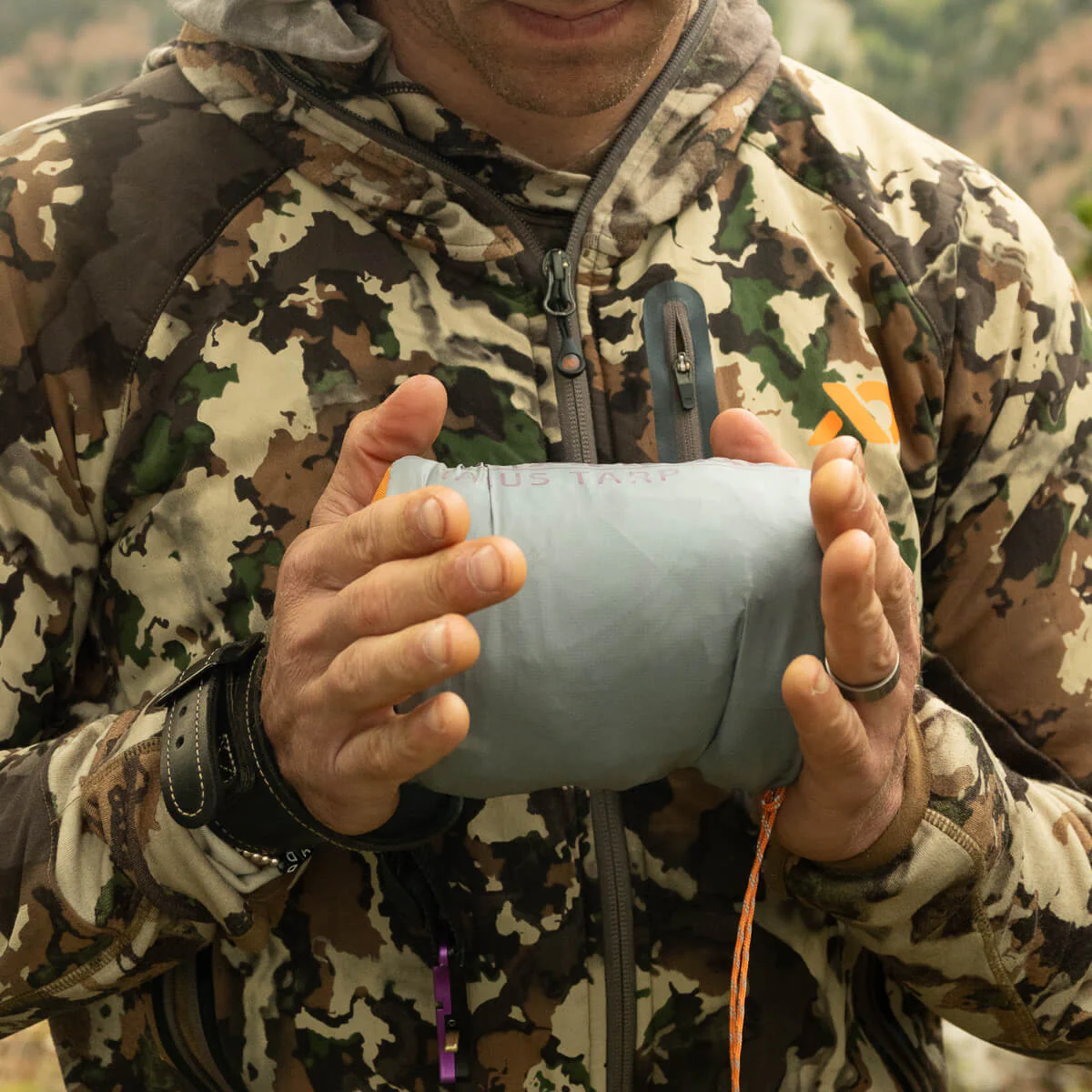
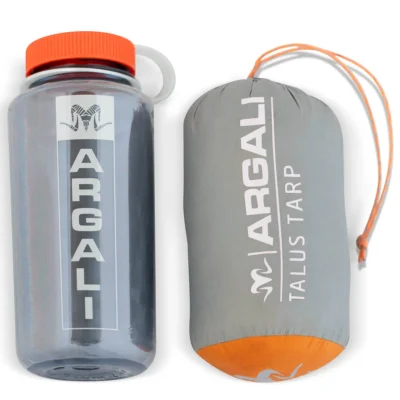
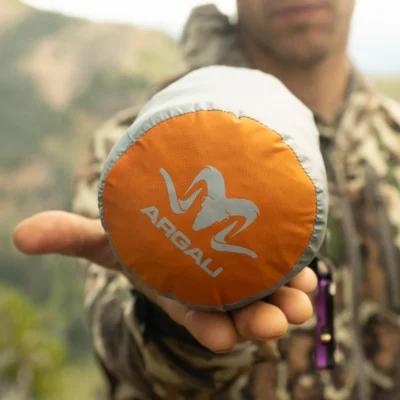
The tarp packs down to approximately 6 × 3 inches. Its compact shape is easy to store inside a backpack, lid compartment or exterior pocket where it can remain accessible when weather changes quickly.
Keeping the tarp near the top of a pack allows it to be deployed before unloading sleeping equipment or other items that should remain dry.
7. Multiple Uses Beyond Sleeping
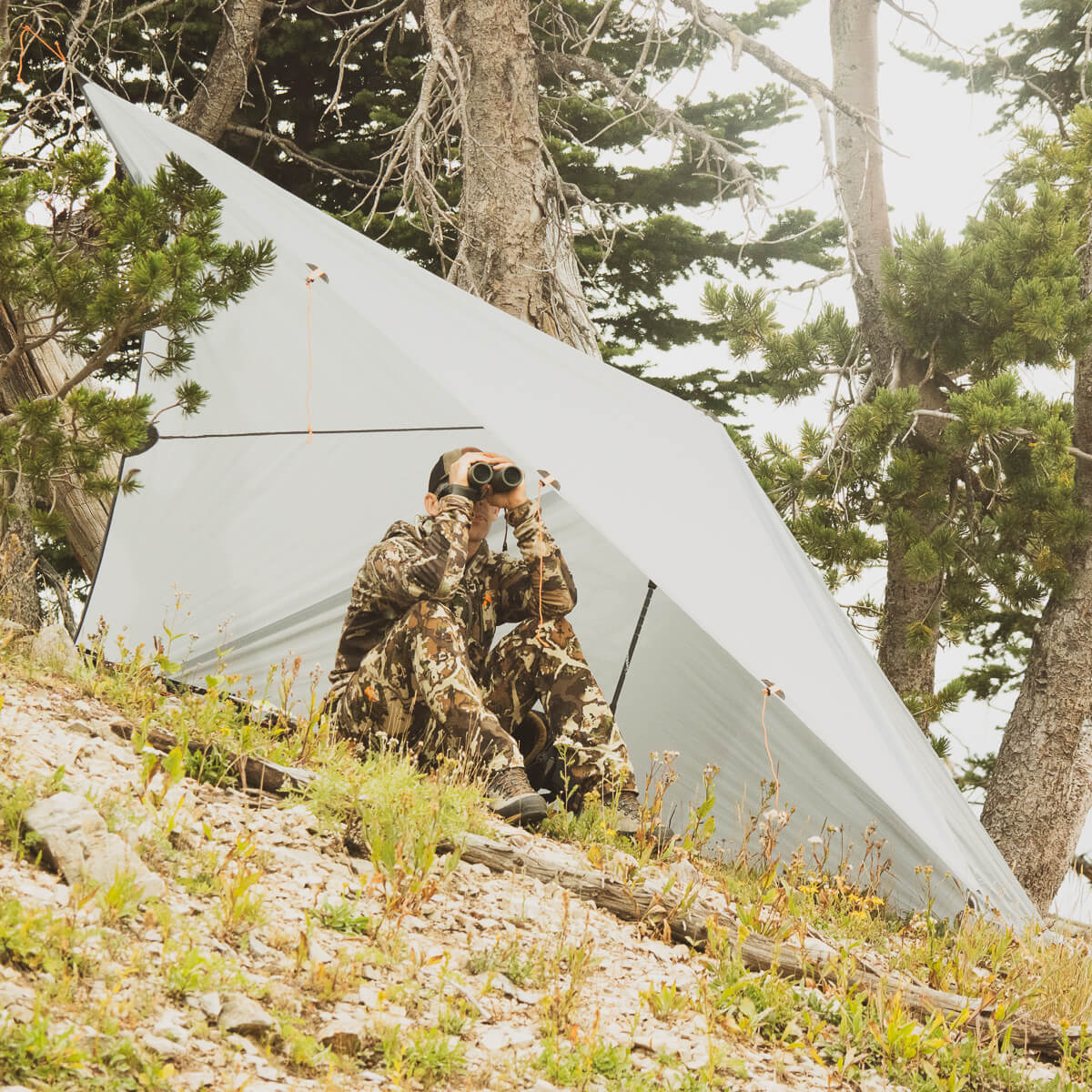
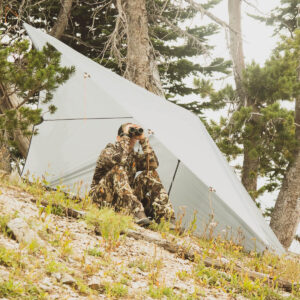
The tarp can provide temporary cover while glassing, protection for equipment, shade during warm weather or a shared area for preparing meals and organizing camp.
When creating elevated group coverage, always pitch the tarp with enough slope for rainwater to drain. A completely flat setup may allow water to pool and place excessive weight on the fabric.
Recommended Talus Tarp Pitching Configurations
Classic A-Frame
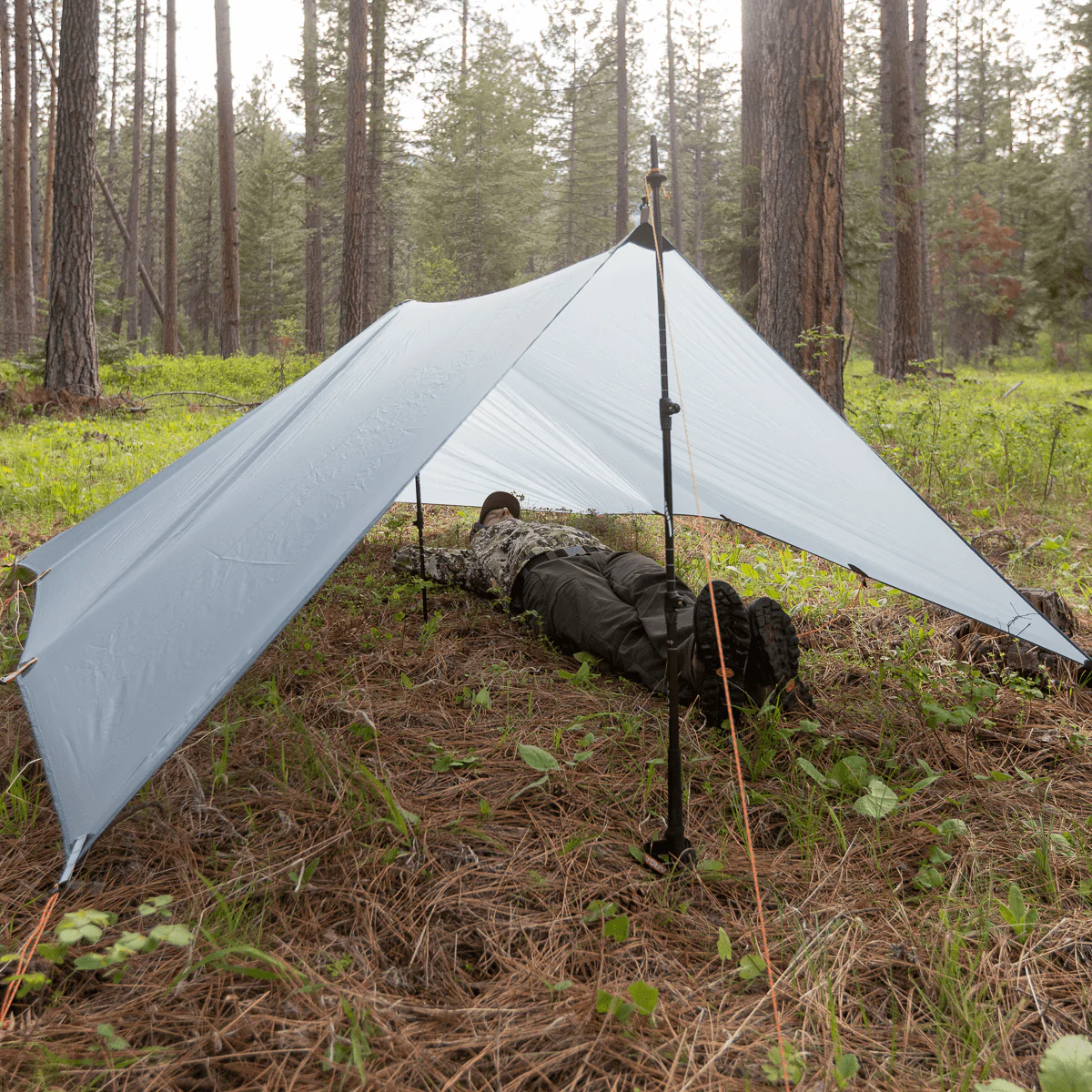
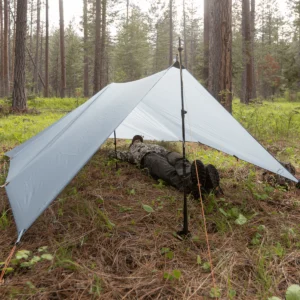
An A-frame is a straightforward configuration for using the tarp as a primary sleeping shelter. Two trekking poles support the short ends while the long sides are staked toward the ground.
This configuration generally requires at least six stakes. Additional stakes can improve wall control and interior space in changing conditions.
Modified A-Frame
A modified A-frame closes one end closer to the ground while keeping an entrance on the opposite side. Positioning the lower end toward the prevailing wind can provide additional protection for the sleeping area and stored equipment.
A trekking pole placed at the reinforced center can create more headroom and improve the usable interior shape.
Classic or Modified Lean-To
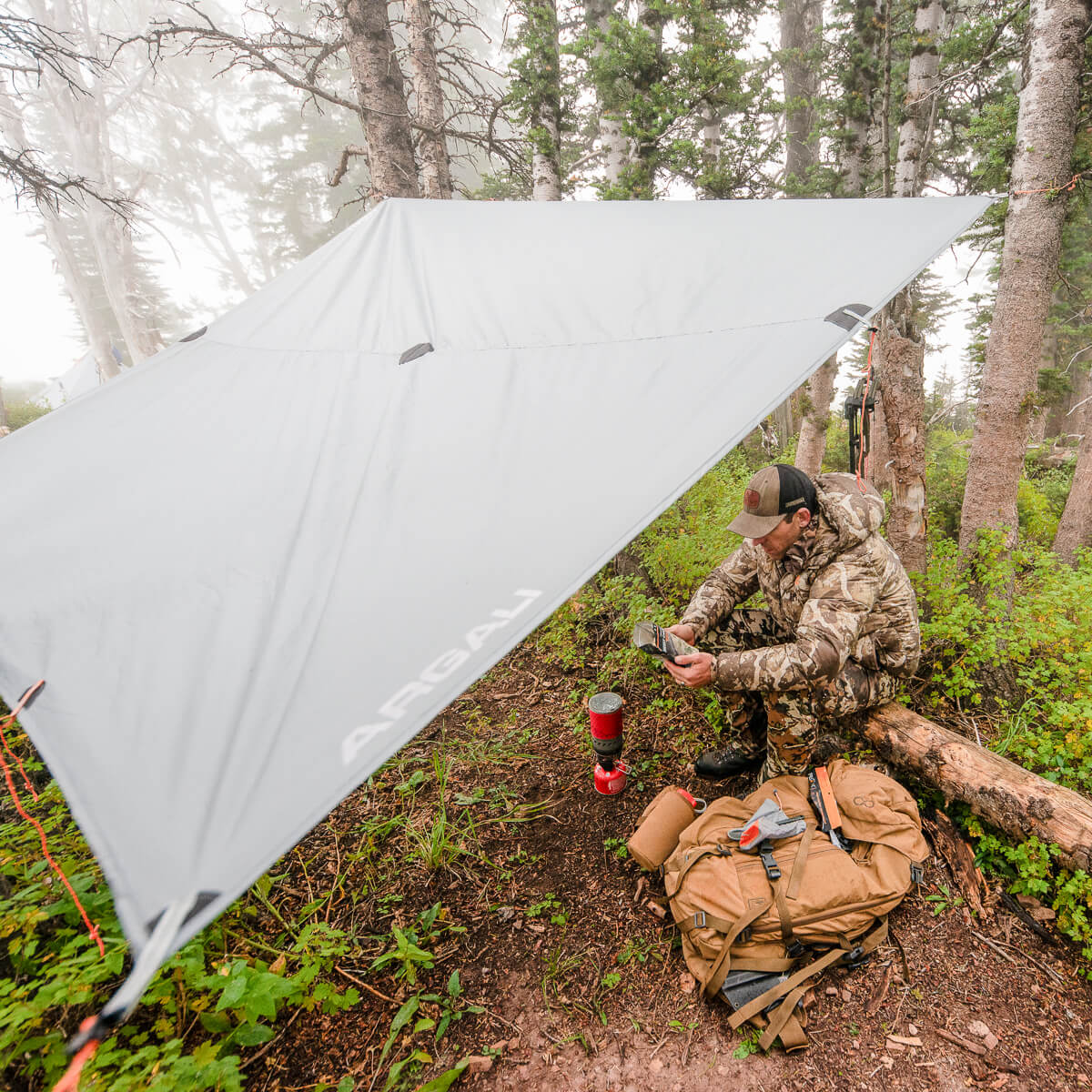
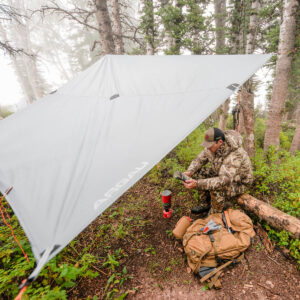
A lean-to can be deployed quickly for rain protection, shade or a short rest stop. One long edge is kept low while the opposite edge is elevated with trekking poles, trees or suitable natural supports.
The modified version uses the reinforced center to create more overhead space and improve runoff.
Group Camp Cover
The Talus Tarp can be suspended above a cooking, equipment or meeting area when suitable trees, poles and longer cords are available.
Do not pitch the tarp completely horizontal. Maintain a visible slope or raised center so water can drain instead of collecting on the fabric.
Talus Tarp Specifications
- Shelter type: Flat-cut backpacking tarp
- Fabric: 20D Nano-Ripstop SilPoly
- Fabric coating: Sil/sil 2500 mm treatment
- Center reinforcement: X-Pac fabric
- Shelter weight: Approximately 17.2 oz
- Weight with six stakes: Approximately 19.9 oz
- Length: Approximately 10 ft
- Width: Approximately 8.5 ft
- Guy-out points: 12
- Recommended stakes: Six
- Packed size: Approximately 6 × 3 in
- Tension adjustment: Integrated line-locs
What Is Included?
Each package includes the Talus Tarp, two 120-inch pieces of paracord, ten 24-inch pieces of paracord, six Argali 7075 aluminum Piton tent stakes and one tube of seam sealer.
Trekking poles, additional stakes and extra cord are not listed as standard package contents. The exact equipment needed will depend on the selected pitch and conditions at the campsite.
Seam Sealing the Talus Tarp
The shelter is highly water resistant when supplied, but the seams must be sealed before the tarp is considered fully waterproof.
Pitch the tarp in a dry, ventilated location and access the inside of its seams. Apply a very thin bead of the supplied silicone sealer to all stitched seams and work it carefully into the thread.
Use only enough product to cover the stitching. Excessive silicone adds weight, creates an untidy finish and may run down the fabric.
Allow the treatment to dry for at least one hour. A curing period of up to three hours is preferable when temperature and conditions allow.
Review the official Argali seam-sealing instructions before using the shelter in sustained rain.
Build Your Calenvia Shelter System
For a fully enclosed solo shelter, compare the Owyhee 1P Tent. Backpackers prioritizing the lowest possible weight can explore the Owyhee 1P Pro Dyneema Tent.
For a larger two-person floorless shelter, consider the Rincon 2P Tent. Browse the complete Backcountry Tents collection to compare available shelter sizes and configurations.
Care and Long-Term Storage
Shake off loose dirt, leaves and debris after every trip. Wipe localized marks gently with clean water and a soft cloth.
Allow the Talus Tarp, paracord and stuff sack to dry completely before storage. Packing damp fabric for an extended period can lead to odor, staining or damage.
Avoid machine washing, bleach, fabric softener, harsh detergent and high heat. Store the shelter in a cool, dry location away from direct sunlight, chemicals and sharp equipment.
Before every trip, inspect the fabric, center reinforcement, guy-out points, line-locs, paracord, seams and stakes. Repair small punctures or loose attachment points before placing the shelter under strong tension.
For current manufacturer specifications, visit the official Talus Tarp product page. For practical setup ideas, review Argali’s flat-cut tarp pitching guide.
A Versatile Shelter for Changing Conditions
The Talus Tarp combines a generous coverage area, compact packed size, no-sag fabric and 12 adjustable attachment points in a lightweight backcountry package.
It can serve as a primary shelter, emergency weather layer, glassing cover, equipment canopy or group-camp gathering space.
For backpackers and hunters who value flexible setup options and dependable overhead protection, the Talus Tarp offers a practical balance of low weight, usable coverage and backcountry versatility.
Be the first to review “Talus Tarp”
Related products
Backcountry Tents
Selway 6P Pro Dyneema Tent – Ultra-Light 6 Person Backpacking Shelter
Backcountry Tents
Backcountry Tents
Backcountry Tents
Reviews
There are no reviews yet.